Studio-Driven Mobile Ecosystems Layer Rewards Through Integrated Payment Mechanisms

Game studios continue to refine mobile prize ecosystems by embedding payment flows directly into multi-tiered reward frameworks and this integration allows users to move between deposit actions and incentive unlocks without leaving the core application environment. Observers note that such designs emerged from iterative development cycles where transaction processing became a core component rather than an external add-on and the approach gained traction as studios sought to reduce friction points that previously interrupted engagement sequences.
Core Components of Payment-Reward Integration
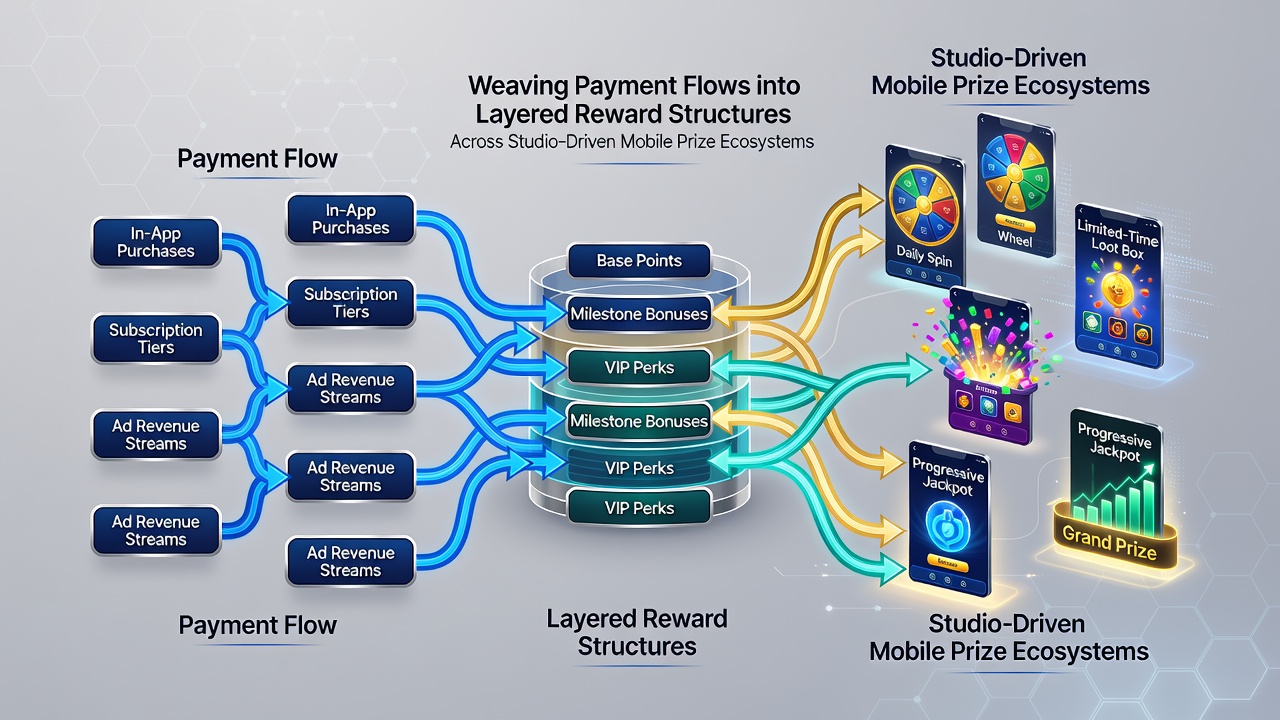
Payment systems in these ecosystems operate through API connections that trigger reward tier advancements the moment a transaction completes while reward structures themselves consist of progressive levels that unlock additional prize multipliers or entry opportunities into higher-value mobile competitions. Data from industry reports shows that studios which synchronized these elements recorded measurable increases in session duration because users encountered fewer interruptions between funding an account and accessing the next reward bracket. Those who have examined platform architectures point out that real-time validation protocols ensure deposits register instantly across both payment ledgers and reward databases and this simultaneity prevents the lag that once separated financial actions from incentive delivery.
Technical Architecture Behind Layered Systems
Engineers construct these platforms using modular codebases where payment gateways feed directly into reward engines through secure data pipelines and each layer of the reward structure contains conditional triggers tied to transaction values or frequency metrics. For instance a user completing a second deposit within a defined window automatically advances to a new tier that grants enhanced prize eligibility and the system logs this progression without requiring separate user confirmation steps. Research conducted at institutions tracking digital entertainment trends indicates that such conditional logic reduces user drop-off rates during onboarding phases because the platform itself manages the transition between payment completion and reward activation.
Regional Regulatory Influences on Platform Design
Regulatory frameworks across multiple jurisdictions shape how studios implement these integrated flows and developers must align transaction monitoring features with local compliance requirements while still maintaining seamless user experiences. In Australia the Australian Communications and Media Authority has issued guidance on digital prize services that encourages transparent payment tracking within reward programs and studios operating there have adjusted their layered structures to include visible audit trails that satisfy oversight standards. Similarly Canadian provincial authorities maintain separate rules for mobile prize applications yet many platforms now incorporate unified payment-reward modules that adapt regionally without requiring users to navigate different interfaces.
What's interesting is how these adaptations allow a single codebase to serve diverse markets because conditional flags within the reward engine adjust tier thresholds based on user location data collected at registration. The result appears in consistent engagement patterns across borders even as underlying compliance layers differ.
Case Examples from Major Studios
One studio operating across North American and European markets introduced a system in early 2025 that tied each deposit amount to an immediate reward tier recalculation and users advancing through five successive layers gained access to progressively larger prize pools within live mobile competitions. Figures released by the company revealed that participants who engaged with the integrated payment-reward loop completed an average of 3.2 additional transactions per month compared with those using earlier non-layered versions. Another developer based in Asia incorporated loyalty multipliers that scaled according to payment velocity and this mechanic allowed frequent depositors to accelerate their progress through reward brackets while occasional users still received baseline incentives tied to their activity history.
Developments Anticipated by June 2026
By June 2026 several studios plan to expand these frameworks with predictive analytics that anticipate user payment patterns and pre-load corresponding reward adjustments into the system cache and such preemptive layering aims to further compress the time between transaction initiation and tier advancement. Industry analysts tracking these roadmaps note that the changes build upon existing architectures rather than replacing them and this incremental evolution supports backward compatibility for users already embedded in current tier progressions. Observers tracking mobile prize growth expect that these enhancements will coincide with broader adoption of digital wallet integrations that further embed payment actions inside the reward ecosystem.
Conclusion
The practice of weaving payment flows into layered reward structures continues to define how game studios construct mobile prize ecosystems and the technical and regulatory considerations outlined here reflect ongoing refinements rather than static solutions. Those who monitor platform metrics report sustained user retention when payment and reward components operate as a unified system and future iterations will likely maintain this core principle while adapting to new market conditions and compliance expectations across regions.