Payment velocity shapes how providers embed escalating reward paths into reel chases and live table formats
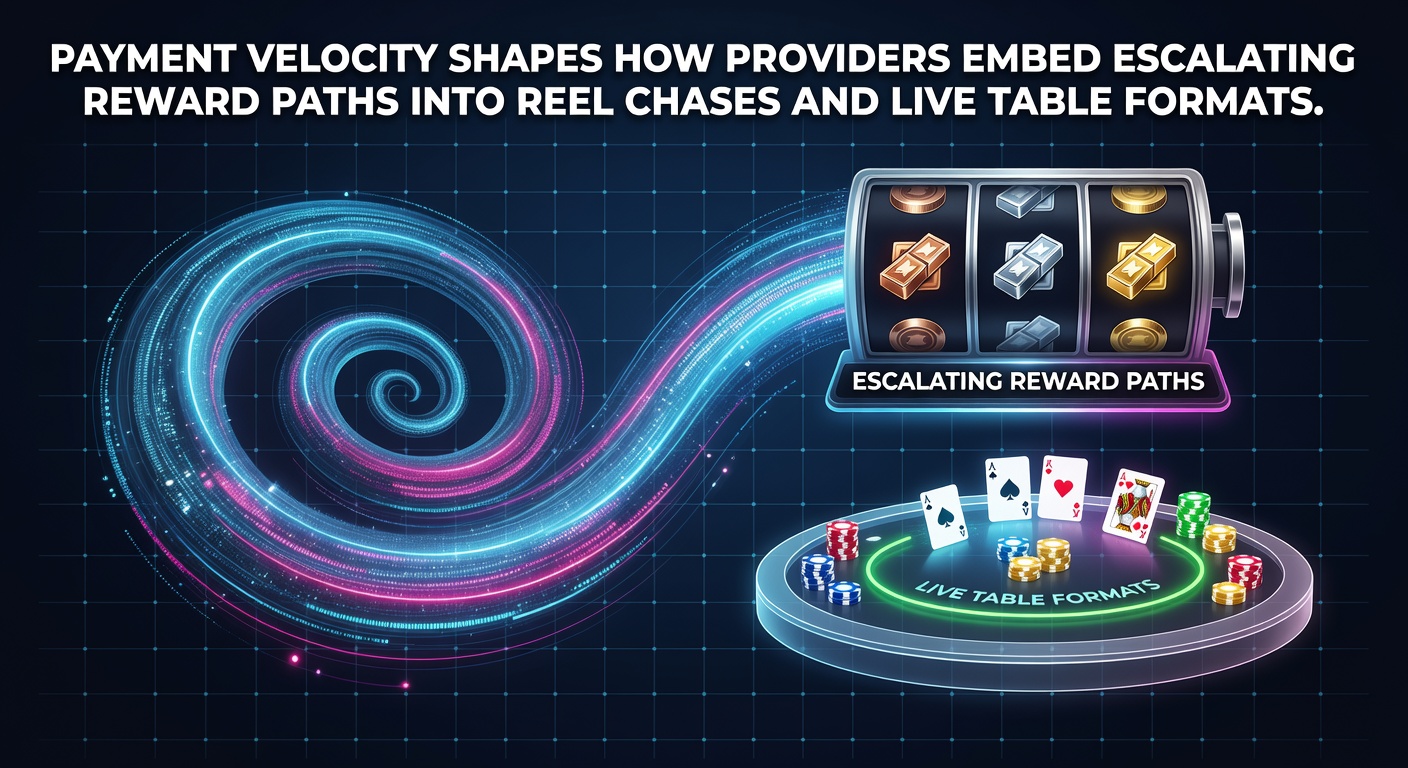
Payment velocity refers to the speed at which deposits and withdrawals process in online gaming environments, and this metric directly influences how providers structure progressive incentives across slot machines and live dealer tables. Faster transaction rails allow operators to synchronize reward triggers with player activity in real time, creating layered paths where each completed deposit unlocks higher tiers of multipliers or bonus sequences.
Observers note that providers now map instant payment confirmations to dynamic reward ladders, particularly in reel formats where sequential spins accumulate escalating free spin bundles or jackpot qualifiers. Data from industry transaction analyses shows that platforms using sub-second deposit verification embed these paths more densely than those reliant on traditional banking delays, resulting in tighter integration between financial actions and gameplay progression.
Mechanics of reward embedding in reel formats
Reel chases incorporate payment velocity through automated triggers that activate once a deposit clears, converting the incoming funds into immediate access to enhanced features such as stacked wilds or chained bonus rounds. Providers configure these systems so that each verified transaction increments a visible meter, advancing players along predefined reward paths that scale with deposit frequency and size. Research indicates this approach appears in multiple studio portfolios where mobile-first wallets feed directly into slot engines, bypassing manual approvals and enabling continuous play loops.
Take the case of progressive reel networks that link wallet activity to multiplier ladders, where a rapid deposit sequence elevates a player from base free spins into a premium tier featuring live jackpot contributions. Figures reveal that networks employing lightning-fast rails report higher average session lengths because the reward paths unfold without interruption, maintaining momentum across consecutive reel sessions. And providers adjust these paths dynamically, scaling the escalation rate based on overall transaction throughput rather than static schedules.
Application across live table environments
Live table formats adopt similar velocity-driven structures, embedding escalating rewards through dealer-activated multipliers that respond to instant deposits during active rounds. When payment confirmations arrive mid-session, systems route the value into loyalty accumulators that unlock table-specific bonuses such as side-bet enhancements or progressive side pots. This creates continuous reward paths where each deposit not only funds play but also advances the player toward higher-stakes variants or exclusive dealer interactions.
Studies of transaction-integrated tables demonstrate that providers synchronise payment velocity with round timing, allowing multipliers to compound across consecutive hands or spins when deposits process without delay. Observers note the pattern extends to hybrid environments where live elements overlay slot mechanics, and fast rails ensure reward escalators remain accessible without exiting the table interface. What's significant is the ability to tie VIP milestone progress directly to deposit speed, producing measurable shifts in how operators calibrate incentive density.

Network-level integration patterns
Across provider networks, payment velocity serves as the connective tissue between disparate game formats, enabling unified reward paths that carry progress from reel sessions into live tables and back again. Operators configure shared ledgers so that a completed deposit in one vertical immediately registers across connected titles, advancing the player along a single escalating trajectory. This architecture relies on API-level connections between wallet processors and game servers, permitting real-time updates to bonus eligibility and multiplier availability.
According to transaction volume reports published by the Nevada Gaming Control Board, platforms that prioritise high-velocity rails show increased cross-format engagement because players encounter fewer friction points when moving between reel chases and live dealer environments. Providers therefore design reward paths with velocity thresholds, unlocking additional layers only after a set number of rapid transactions occur within defined windows. Such configurations appear in both land-based connected systems and fully digital deployments, reflecting broader adoption of instant settlement technologies.
Regional variations in implementation
Implementation details vary by jurisdiction, with European operators often emphasising compliance-aligned velocity tools that still permit escalating reward structures, whereas Australian markets demonstrate faster integration cycles tied to local banking rails. A 2025 analysis from the Australian Communications and Media Authority highlights how velocity metrics correlate with reward path complexity in licensed environments, noting increased use of mobile wallet triggers for live table bonuses. Providers adapt these regional differences by maintaining modular systems that adjust escalation rates based on local transaction standards.
June 2026 data points suggest continued refinement, with several major studios rolling out updated frameworks that further compress reward path intervals in response to evolving payment infrastructure. These updates focus on maintaining parity between reel and table formats, ensuring that velocity advantages translate consistently regardless of game type selected by the player.
Conclusion
Payment velocity continues to function as a core design parameter for providers seeking to embed escalating reward paths across reel and live table offerings. By aligning transaction speed with automated progression mechanics, operators create environments where financial actions directly fuel gameplay advancement and incentive accumulation. The patterns observed across networks indicate sustained investment in these integrations as settlement technologies mature and regional standards evolve.